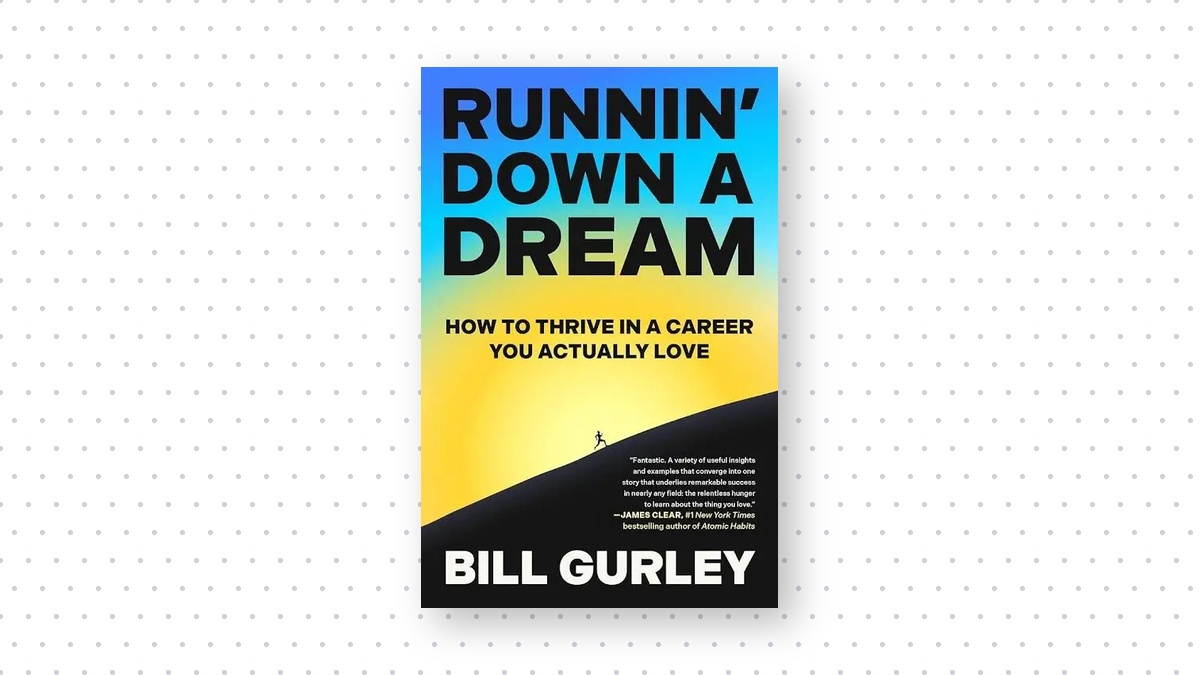
Runnin’ Down a Dream: How to Thrive in a Career You Actually Love by Bill Gurley
My Thoughts
This book started off stating that it would be filled with stories as well as actionable things that the reader could take away. It did start that way, but the balance between stories and truly actionable items got skewed as it went on. The beginning was insightful; towards the end it got less so, but I kept listening because the stories were interesting nonetheless. Someone could argue that if you don’t find the latter principles actionable, you’re just not cut out to succeed, but I’m not sure that’s the case.
One major thought I had throughout the book is survivorship bias. The book talks about certain principles and then shows how one or many people were successful by acting on them. I can’t help but think about it. The book only looks at the folks that succeeded and doesn’t account for the tens of thousands of others that did the exact same thing but weren’t successful. Even a simple example like moving closer to the action: there are probably tens of thousands, if not millions, of people that have done that in hopes of being successful but didn’t find any success. The book doesn’t do enough to account for that, but maybe that wasn’t the tone the author was trying to set. If I asked the author about this, they would probably say that no one principle is going to make you successful. It’s a combination of leveraging all of them to increase your chances.
It also makes me think about the context in which this book is presented. It feels like it was written for a class in high school or early in college, where the tone stays optimistic and doesn’t end every principle with a “but.” For what the book is trying to accomplish, it’s good. I’ll probably be recommending this to my friends and colleagues, but survivorship bias concern in the back of my head is still there.
As a slight side note, I think humans are bad at identifying the reasons for their success. For example, in the book they talk about MrBeast and his success. Either he or the author claims that one of his keys to success was having a group of peers that he would meet with to share notes and help each other grow. Sure that may have been a factor, but I can’t help but think that there were probably other factors that he doesn’t even know about. Take two people running a race and one wins. They ask the winner, “What made you win and endure over the other person?” They might go on a whole story about their training or mentorship, making up a story for what they believe made them successful. Maybe the other person is just objectively a better runner, and in this race, some random reason like a patch of gravel or a bystander caused them to fall behind. The winner’s justifications are just them trying to come up with a narrative after the fact, and they truly don’t know what made them win. And realistically, there could have been many factors or a small factor that had a butterfly effect.
P.S. There is a small section towards the beginning of the book that explains a few different activities you can do to help identify a good career path or next steps to try. That section was honestly more insightful than the rest of the book, but the stories were still interesting.